Teaching: Thriftster
Service and user experience design
by Lucy Bradshaw, Aidan Guinnip, Amanda Jaquin & Kelly Vars, RIT '14

Thriftster
Lucy Bradshaw, Aidan Guinnip, Amanda Jaquin & Kelly Vars, RIT '14
PROBLEM
excessive waste of usable goods thrown out on campus
SOLUTION
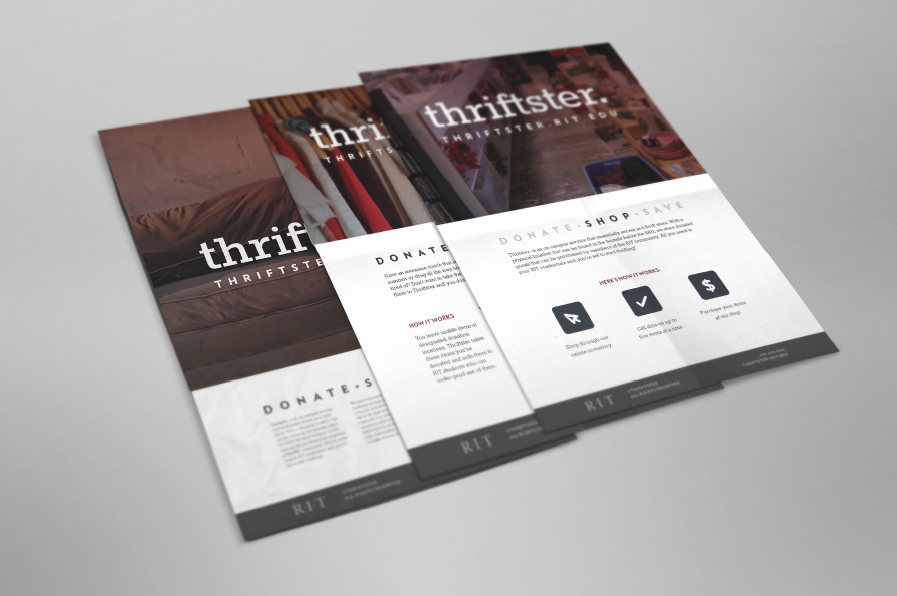
creating convenient donation locations on campus and an online inventory
of these goods for others to purchase
RIT students generate a lot of waste each year, mainly around move-out times. Too often there are usable goods that are thrown out because students are too lazy to figure out what to do with them, don’t want to have to worry about storing them for the summer when they move back home, or don’t want to have the hassle of moving things back home. RIT has put forth a large effort to make the campus more sustainable. This large amount of move-out waste contradicts the campus’ sustainability effort.
PresentationPROJECT BRIEF
Sustainable Behaviors @ RIT
Advanced Web & UX Design | Senior level | RIT
Working collaboratively with your assigned team, you will research and identify appropriate points of design intervention to encourage sustainable behaviors on campus at RIT.
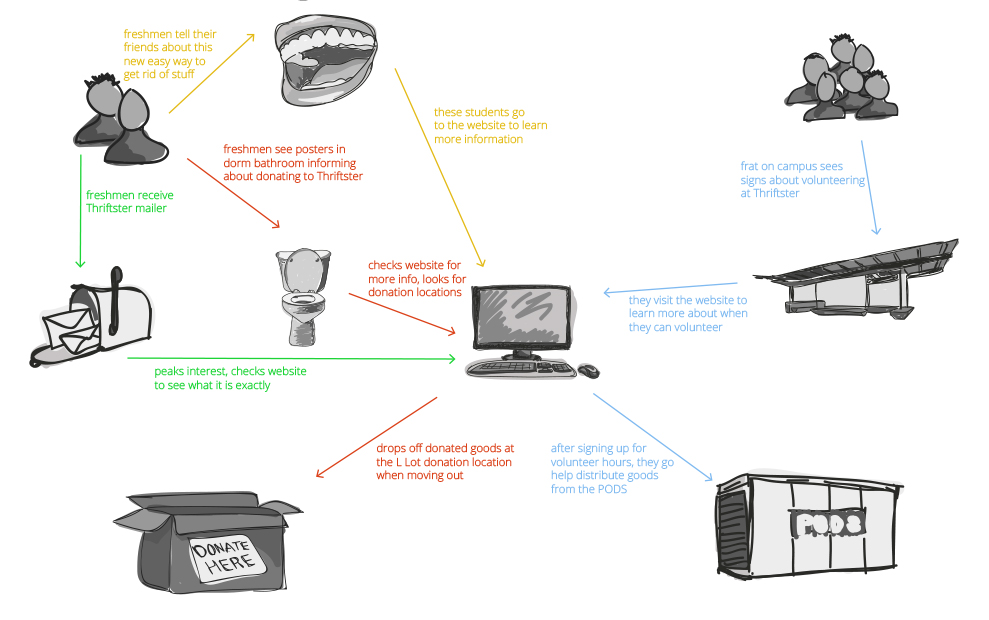
In addition to planning, designing and building a prototype of your proposed service, your group will also work together to explain the systemic view, exploring and illustrating how it works in relationship to existing environmental, physical, institutional, and/or social factors (and more) within this campus community.
The team says:
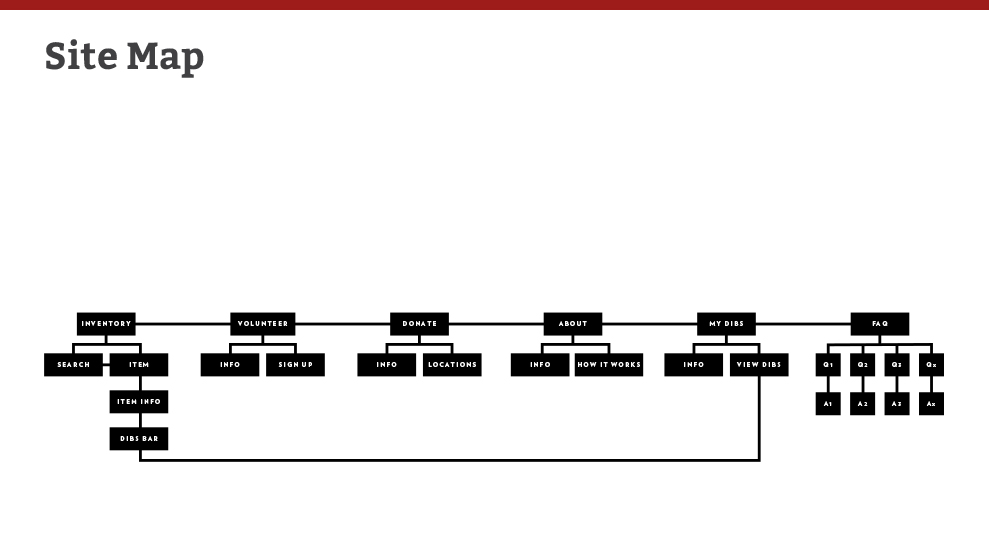
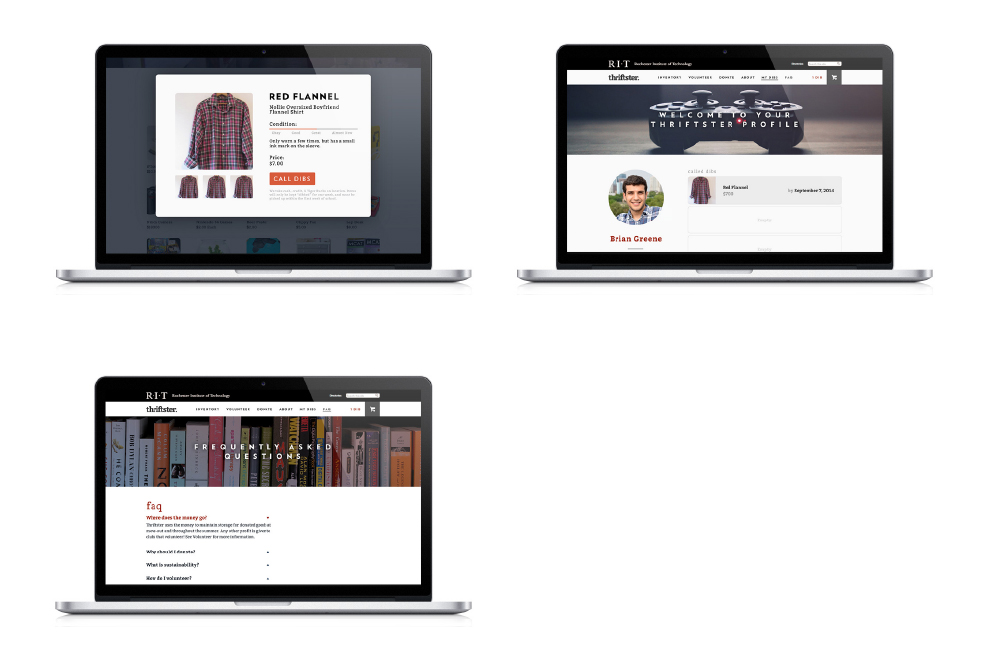
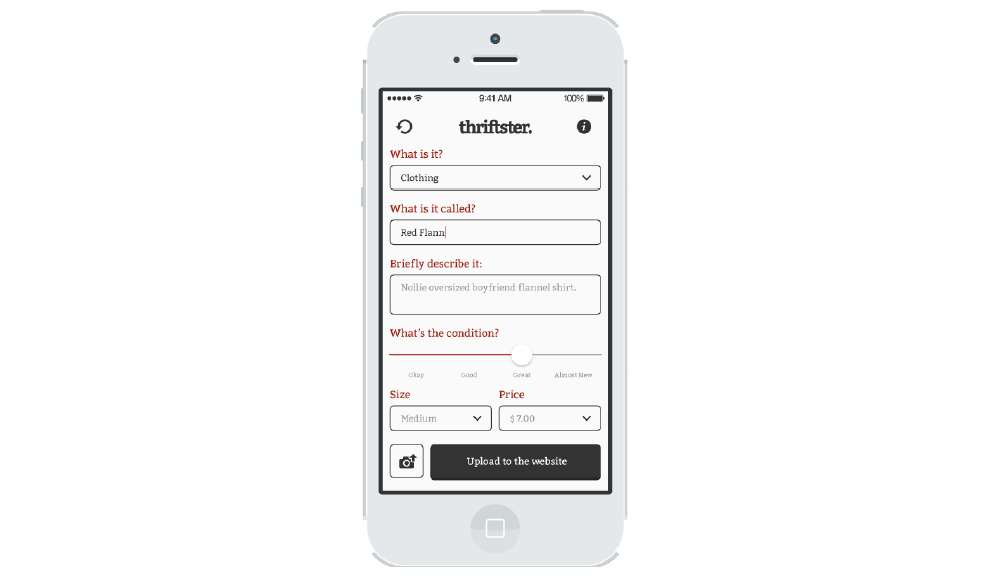
Thriftster is an online database of items—anything from clothing to furniture to posters—that have been donated by RIT students at the end of the academic year for resale. The “store” is intended to help reduce the amount of wasted usable goods that RIT students throw out (mainly when they are moving out) by providing them an easy option for donation instead. Thriftster provides drop off stations across campus so students have easy access to donate their items. As Thriftster collects goods, volunteers upload images, descriptions, and prices to the website for customers to browse and "call dibs" on, which they can then pick up and pay for at the beginning of the next school year. Using storage units and a database also helps Thriftster operate with low overhead and reduced energy consumption.
Thriftster makes "new to you" cool on campus.
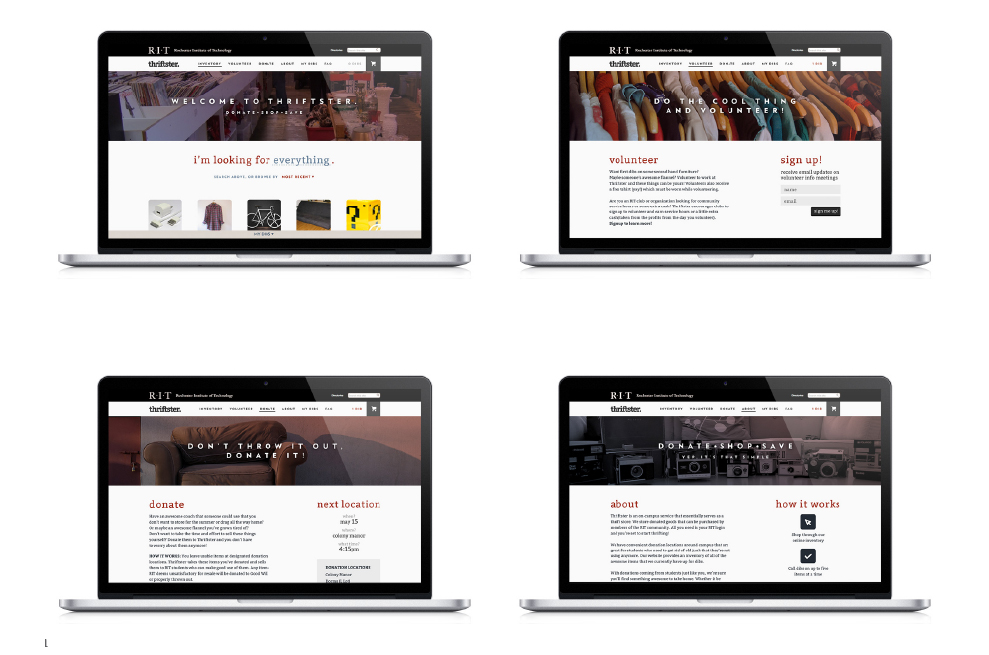
Selected process work